
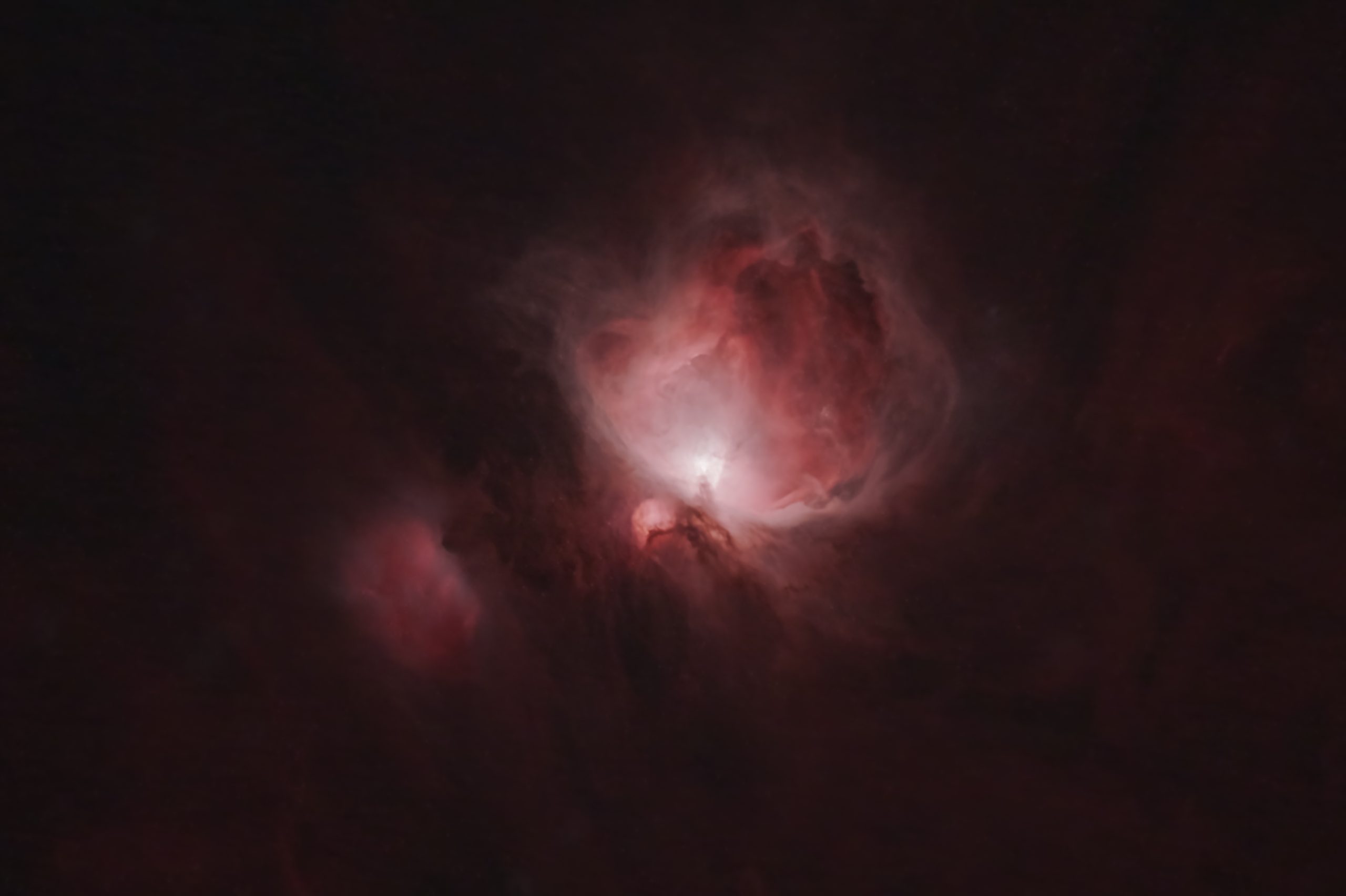
This image captures a starless version of an emission nebula in the southern Milky Way, called the Orion Nebula (M42) in the constellation Orion (the hunter).
The Orion Nebula (Messier 42) is one of the brightest and most famous star-forming regions in the night sky. Its legends find their way back to different civilizations. Located about 1,300 light-years away in the constellation Orion, it sits just below the three stars of Orion’s Belt. The nebula glows brightly because hot, young stars in the Trapezium cluster are energizing the surrounding gas, causing it to shine in shades of red, pink, and blue. Its large size and brightness make it easily visible even from moderately light-polluted areas.
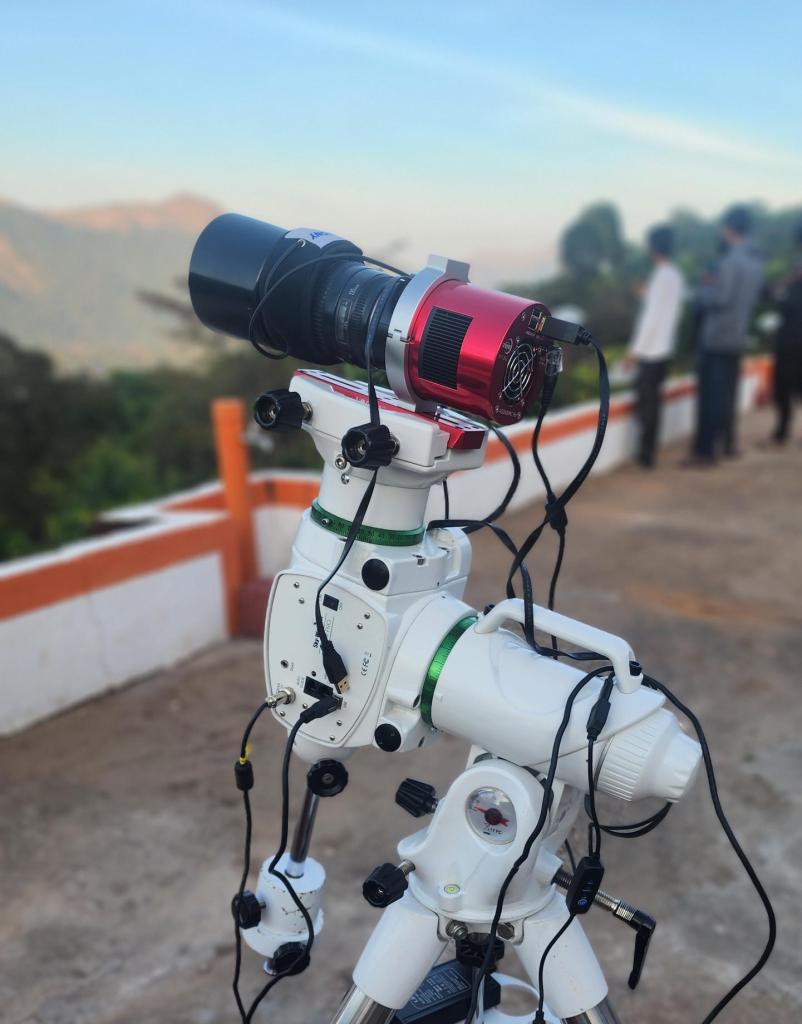
| Camera | ASI2400MC Pro |
| Lens | Canon 135mm f/2 |
| Filter | Quadband Filter |
| Mount | EQ6R Pro |
| Lights | 13 × 120 seconds |
| Darks | 20 × 120 seconds |
| Total Integration Time | 26 minutes |
| Stacked | Deep Sky Stacker |
| Post Processing | Adobe Photoshop & Lightroom |
Inside the Orion Nebula, new stars are forming within thick clouds of gas and dust, making it an active stellar nursery one of the closest such regions to Earth. The energy from the Trapezium stars carves out cavities, illuminates the surrounding material, and shapes the bright, misty structure seen in telescopes and photographs. Because of its brightness, the Orion Nebula is a popular target for beginners, working well with binoculars, small telescopes, and even wide-field camera lenses.
The Orion Nebula is best viewed from late November to early March, when the constellation Orion dominates the winter night sky. The optimal months are December and January, when the nebula rises high in the southern sky around midnight. Even by 10–11 PM, it reaches a good altitude for imaging, making it an excellent and accessible target for both visual astronomy and astrophotography during the winter season.