
Mercury Transit
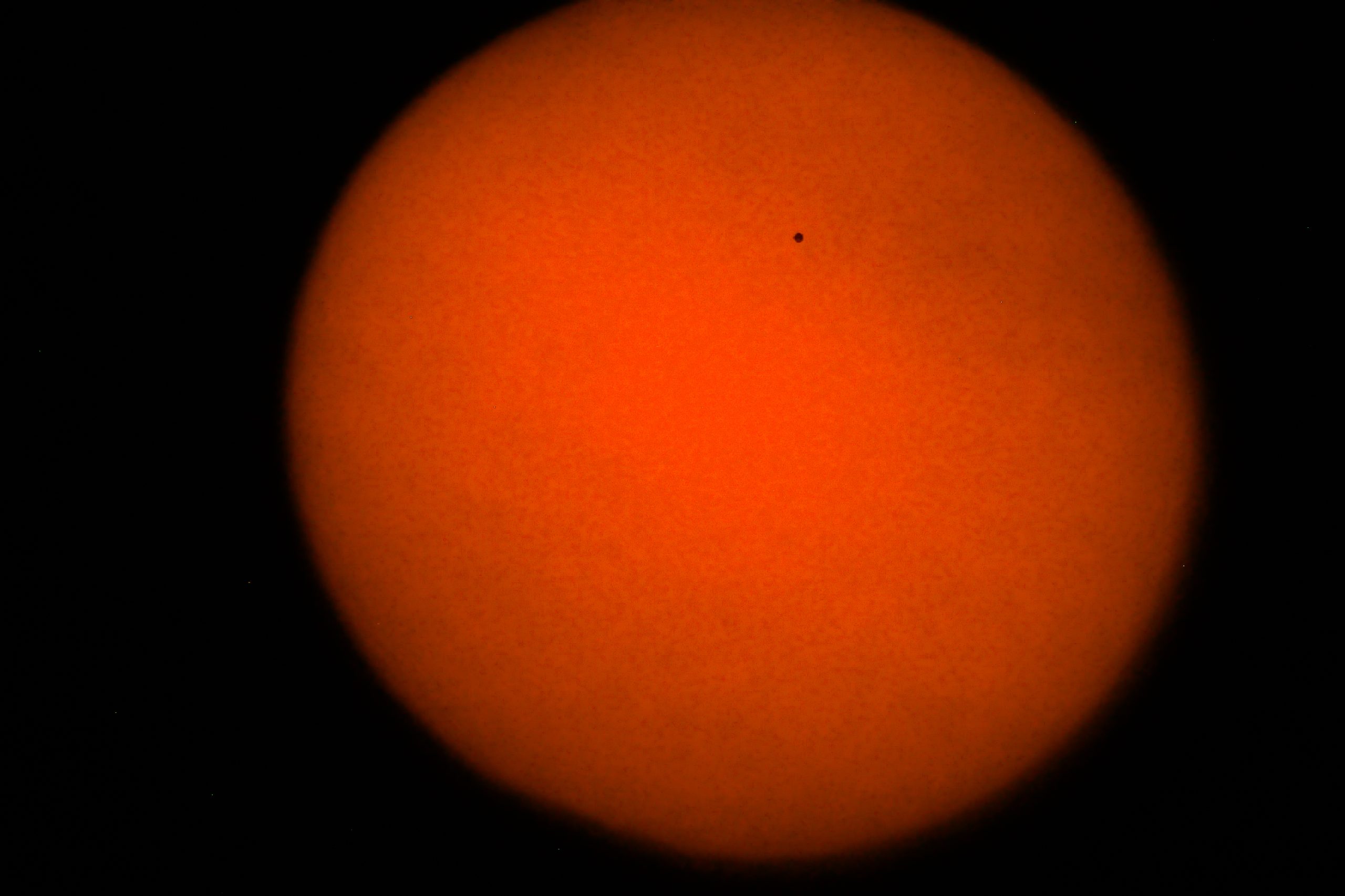
This image shows a rare transit of Mercury, where the tiny dark dot of Mercury passes directly in front of the bright disk of the Sun as seen from Earth.
A Transit of Mercury occurs when the planet Mercury passes directly between the Earth and the Sun, appearing as a tiny black dot moving slowly across the Sun’s bright disk. Because Mercury’s orbit lies inside Earth’s orbit, only Mercury and Venus can produce such transits, and they happen only when Mercury’s orbital path crosses the Sun from our point of view. Even though Mercury comes between Earth and the Sun several times a year, its orbit is tilted by about seven degrees, so most of the time it passes above or below the Sun. Only when everything lines up perfectly does a transit occur, making these events rare and exciting to watch through properly filtered solar telescopes.
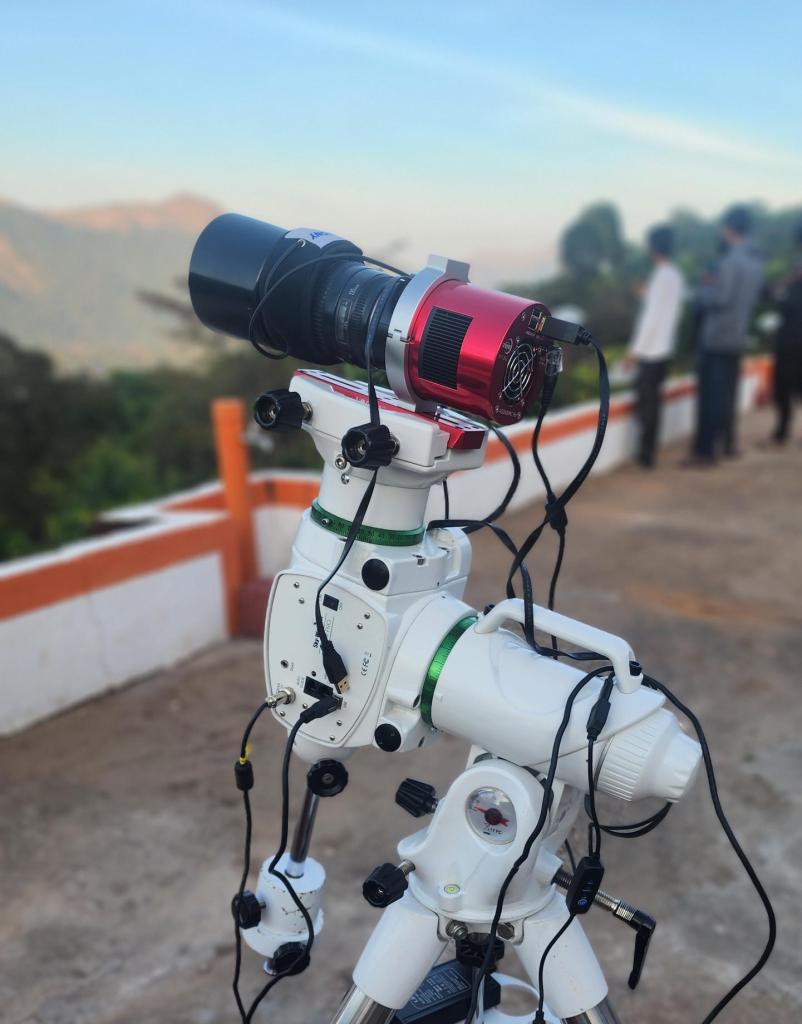
| Camera | Canon 550D |
| Lens | 650mm f/5 Telescope |
| Filter | ND Solar Filter |
| Mount | Non-tracking Equatorial Mount & Tripod |
| Lights | 1 × 1/60 seconds |
| Darks | None |
| Total Integration Time | 1/60 second |
| Stacked | No |
| Post Processing | Adobe Photoshop & Lightroom |
Aside from being a visually unique event, Mercury transits have important scientific value. Historically, astronomers used them to measure distances in the solar system with surprising accuracy, helping determine the scale of planetary orbits. Today, transits help refine models of Mercury’s orbit, test the stability of the Sun’s diameter over long periods, and study optical effects like the “black drop phenomenon,” which helps improve our understanding of atmospheric scattering and telescope behavior. For the public and educators, a Mercury transit is a perfect demonstration of orbital mechanics showing how planets move in three-dimensional space and how rare alignments reveal the clockwork precision of the solar system.
best months to photograph from india
The next Mercury transit will occur on November 13, 2032, followed by another on November 7, 2039. After that, the sequence continues with a May transit on May 7, 2049, then another on November 8–9, 2052, and the next on May 10–11, 2062. Most of these will be at least partially visible from large regions of Earth, including much of Asia, making them accessible for viewers in India with safe solar-viewing equipment.