
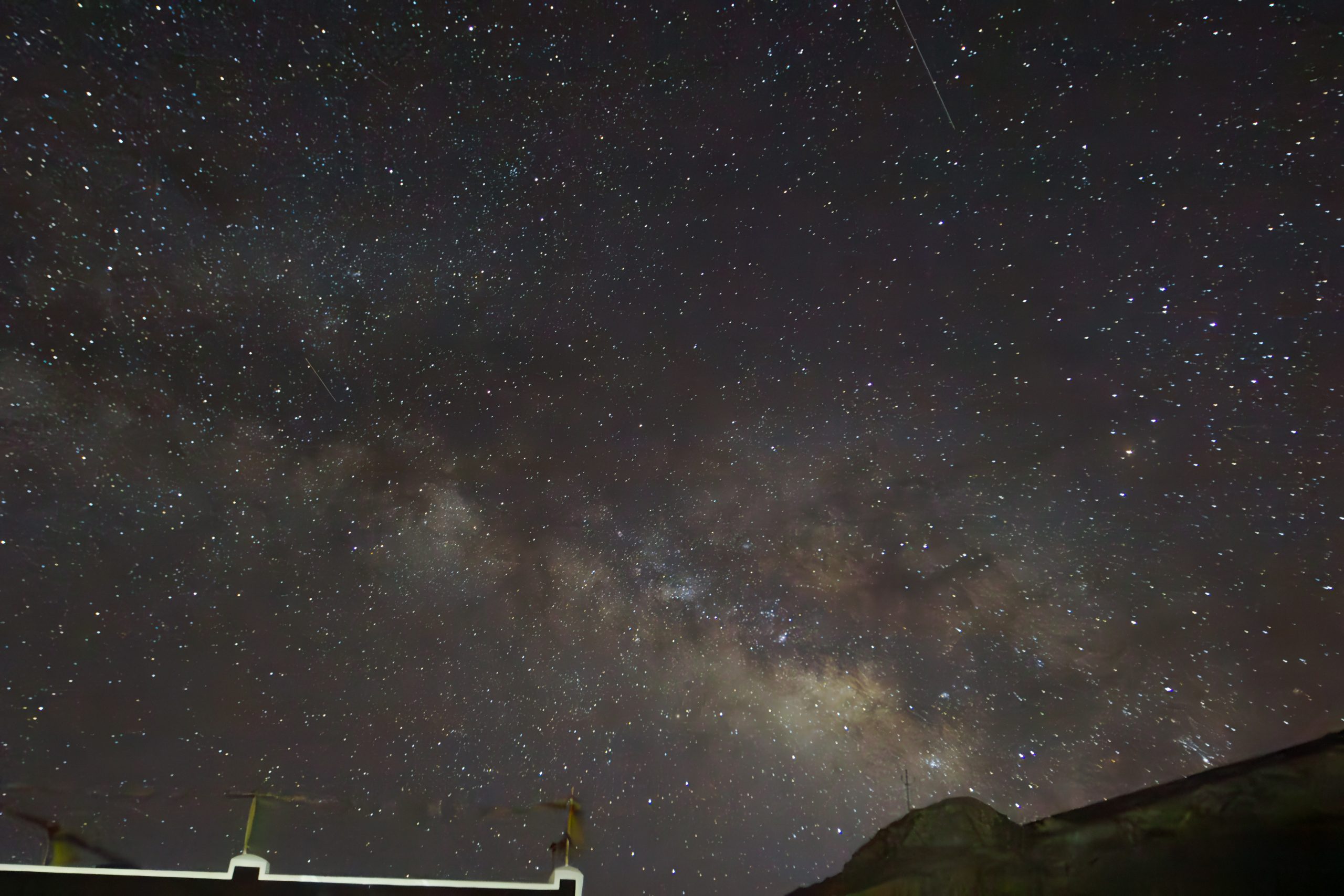
This image represents the Summer Arm and Galactic Core region of the Milky Way, the brightest and most dramatic portion of our galaxy visible from Earth. In summer skies, the Milky Way rises as a bold, glowing arch rich with dense star fields and illuminated dust clouds. The galactic center, located in the direction of Sagittarius and Scorpius, contains some of the highest concentrations of stars, making this region appear strikingly bright even in short-exposure photographs.
| Camera | Canon 550D |
| Lens | 24mm f/3.2 ISO 1600 |
| Filter | None |
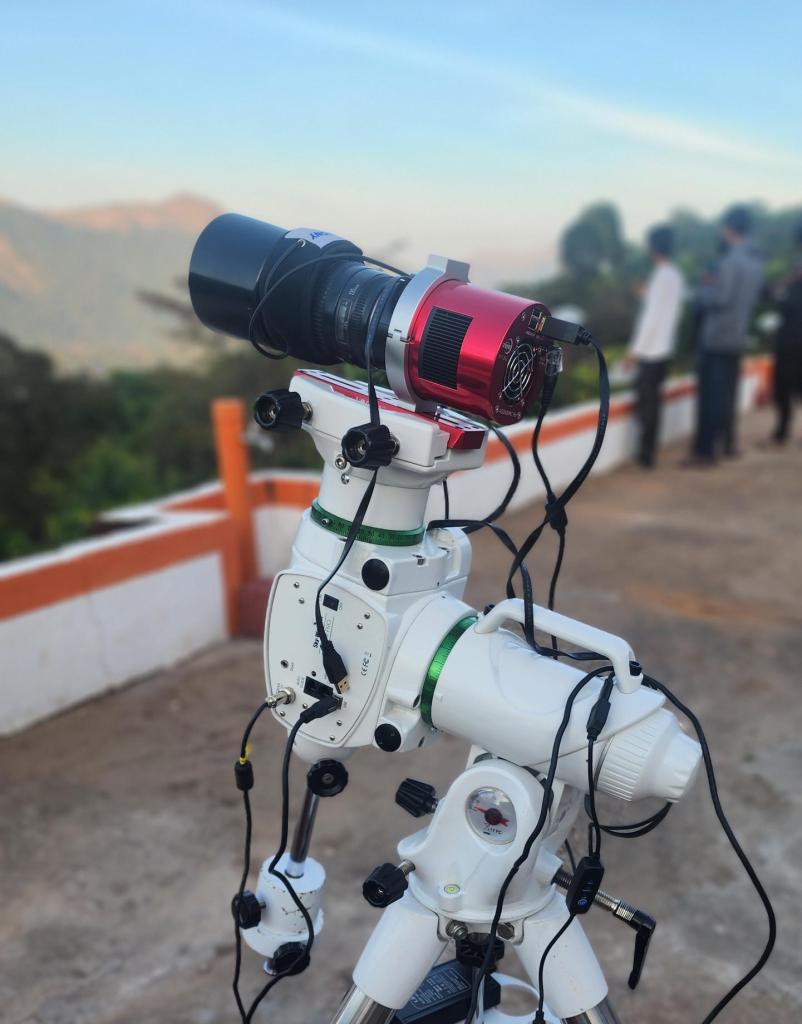
| Mount | Non-tracking Equatorial Mount & Tripod |
| Lights | 1 × 20 seconds |
| Darks | None |
| Total Integration Time | 20 seconds |
| Stacked | No |
| Post Processing | Adobe Photoshop & Lightroom |
In contrast to the winter view, the summer Milky Way points us directly toward the galaxy’s central bulge, where massive star clusters, emission nebulae, dense molecular clouds, and the supermassive black hole Sagittarius A* reside. This section lies within the Sagittarius-Carina Arm, often called the Summer Arm for Northern Hemisphere observers. The dust lanes, bright regions, and star-forming complexes give the summer Milky Way its dramatic texture and deep contrast.
The Summer Arm is best photographed from India between April and September, with the Milky Way core becoming prominent from late May to August. The ideal hours for imaging are 11 PM to 4 AM on new-moon nights, when the core rises high in the southern sky, and atmospheric disturbances are minimal. From regions like Ladakh, the clarity and altitude make the galactic center exceptionally vibrant, revealing intricate structures that are nearly invisible from light-polluted cities.