
Venus & Pleiades
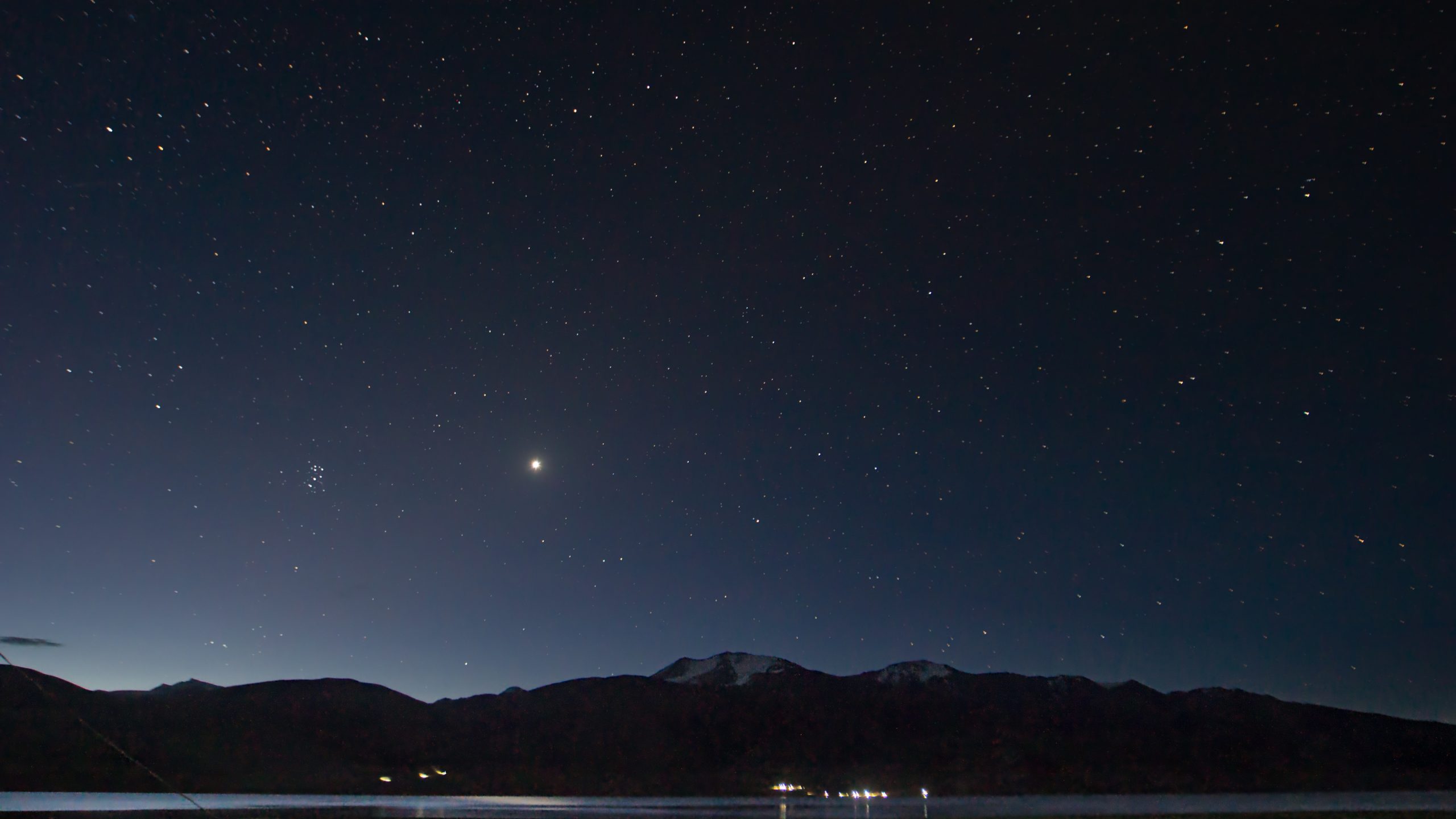
This beautiful celestial scene captures Venus and the Pleiades star cluster side by side, photographed from the high-altitude deserts of Ladakh. The region’s thin, dry air and crystal-clear skies make stars appear unusually sharp and vibrant, creating the perfect backdrop for this wide-field nightscape. Dominating the frame is Venus so bright that it outshines every other point of light while to its left sits the delicate, shimmering patch of the Pleiades (M45), also known as the Seven Sisters. Together, they form one of the most striking and photogenic conjunctions seen in the night sky.
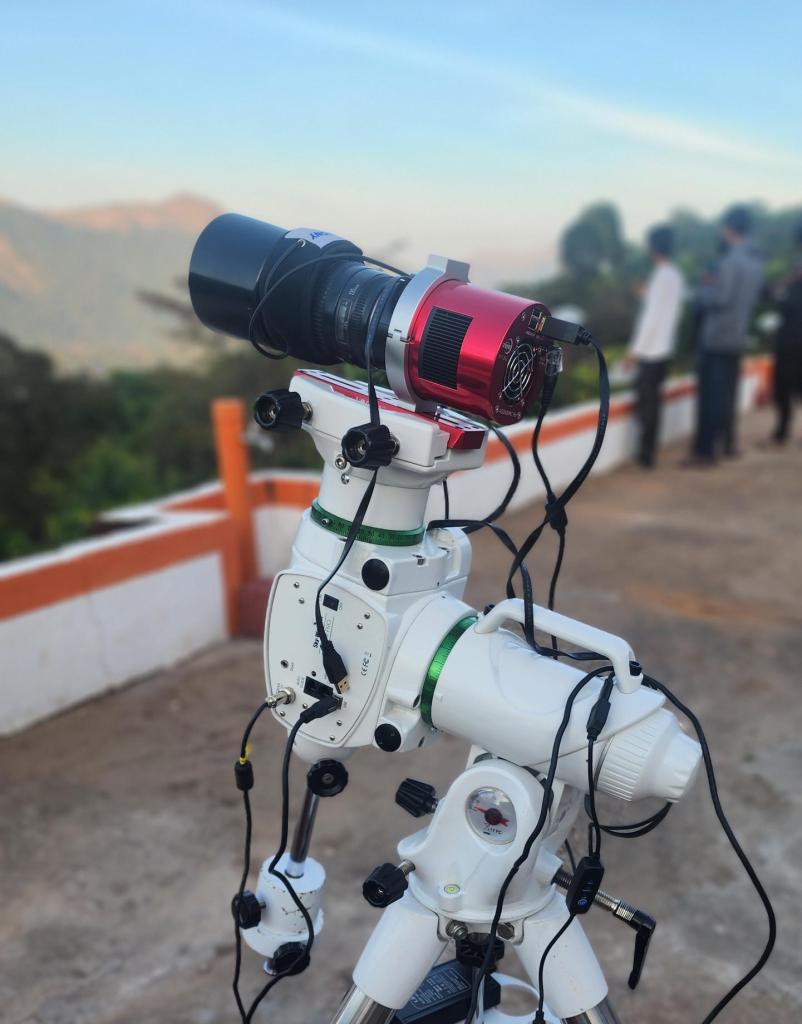
| Camera | Canon 550D |
| Lens | 35mm f/3.2 |
| Filter | None |
| Mount | Non-tracking Mount & Tripod |
| Lights | 1 × 13 seconds |
| Darks | None |
| Total Integration Time | 13 seconds |
| Stacked | No |
| Post Processing | Adobe Photoshop & Lightroom |
Venus, the brilliant “Evening Star,” shines with an intensity unmatched by any other planet. As the second planet from the Sun, it is often seen shortly after sunset or just before sunrise, earning it alternating titles as the Morning Star and Evening Star. Its dazzling brightness comes from its thick, reflective cloud cover, which scatters sunlight so efficiently that Venus stands out even in twilight skies. During a conjunction like this, its steady, golden glow provides a dramatic contrast to the faint, icy-blue sparkle of the nearby star cluster.
The Pleiades themselves are one of the most recognizable and culturally significant star groups in the night sky. Located about 440 light-years away in the constellation Taurus, this young open cluster only 100 to 120 million years old, Surrounding the cluster is a delicate veil of blue reflection nebula, created as starlight scatters off nearby interstellar dust. What appears as a tiny misty patch in photographs is actually a tight family of stars known across the world through ancient myths, from Japan’s Subaru to India’s Krittika.
best months to photograph from india
Venus and the Pleiades (M45) come close to each other roughly once a year, but the best photographic opportunities happen during their tight conjunctions, which occur about every 8 years in a particularly striking way. From India, the most favorable times are during early evening skies in late March to early April, when Venus passes near the Pleiades in the constellation Taurus.