
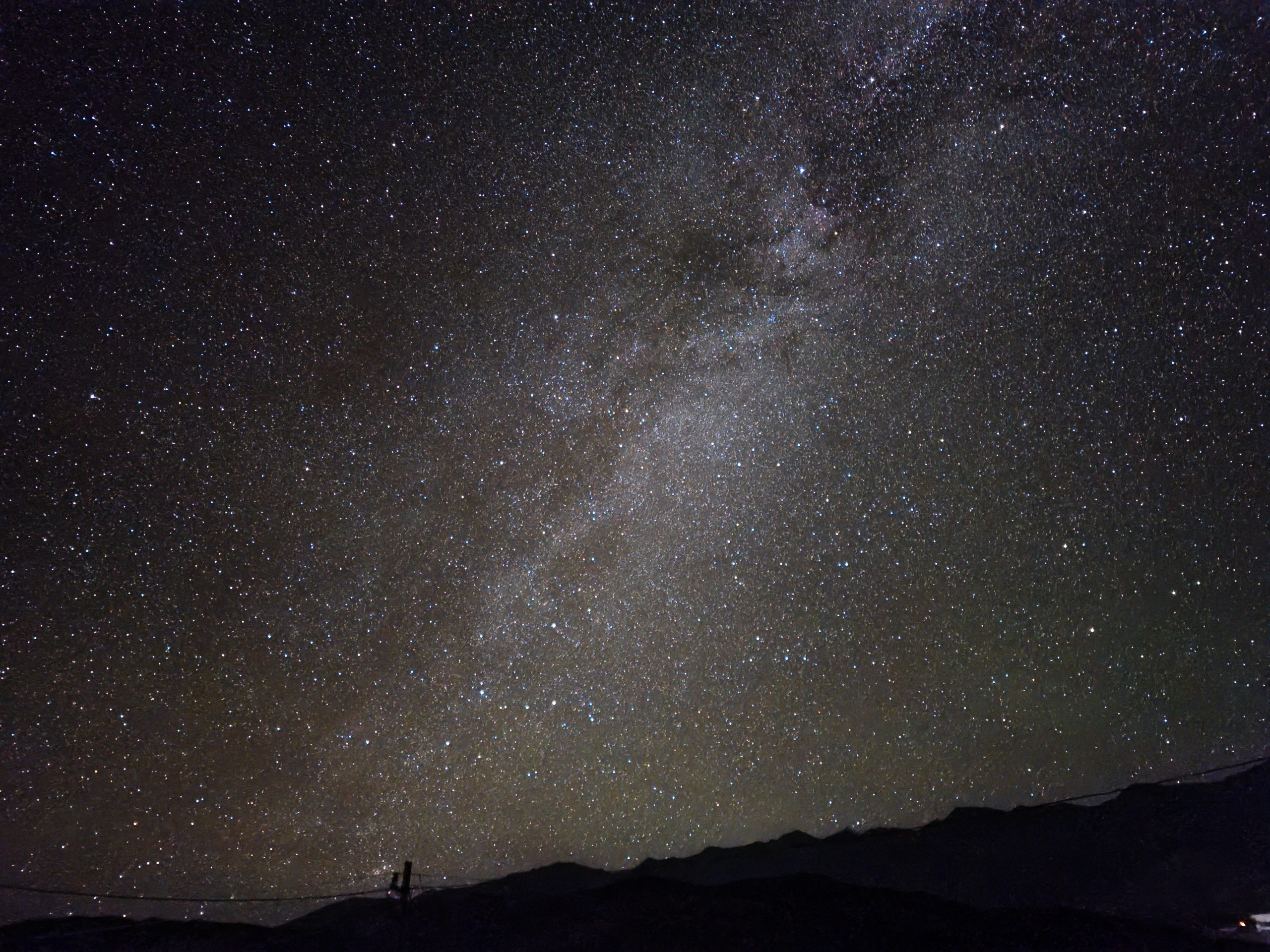
The image captures the Winter Arm of the MilkyWay stretching across the clear night skies of Ladakh, appearing as a soft, misty band made of countless distant stars. What we see is the Milky Way viewed edge-on from inside our galaxy, and in winter, this arc looks fainter and gentler compared to the bright summer core. Ladakh’s high altitude, extremely dry air, and minimal light pollution help reveal even the subtle glow of this lesser-seen side of our galaxy.
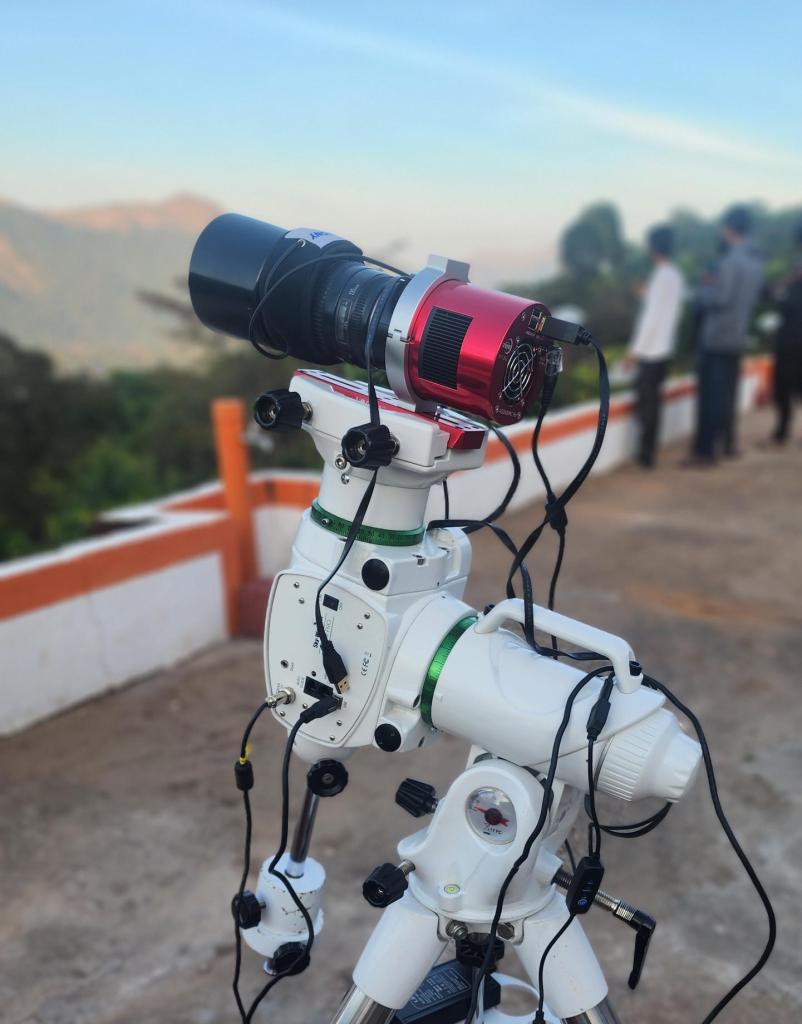
| Camera | Samsung Galaxy S22 Ultra |
| Lens | 13mm f/2.2 12MP, ISO 1600 |
| Filter | None |
| Mount | Non-tracking Tripod |
| Lights | Many short frames |
| Darks | None |
| Total Integration Time | 4 minutes |
| Stacked | Expert RAW in Samsung |
| Post Processing | Adobe Photoshop & Lightroom |
During winter night sky faces away from the Milky Way’s bright central bulge and instead looks along our local spiral structure, often called the Orion Cygnus Arm or the Winter Arm. This region is filled with beautiful but fainter features dark dust lanes, star clouds, reflection nebulae, and bright constellations such as Orion, Taurus, and Canis Major. While the Winter Arm lacks the intense glow of the galactic center, it is rich in iconic deep-sky objects and forms one of the most recognizable seasonal skies for observers in the Northern Hemisphere.
The Winter Milky Way is best photographed from India between November and February, reaching its highest point from late evening to midnight. For Ladakh and other dark-sky regions, the ideal time is new-moon nights between 9 PM and 2 AM, when the skies are darkest and atmospheric clarity is highest.