
Startrails
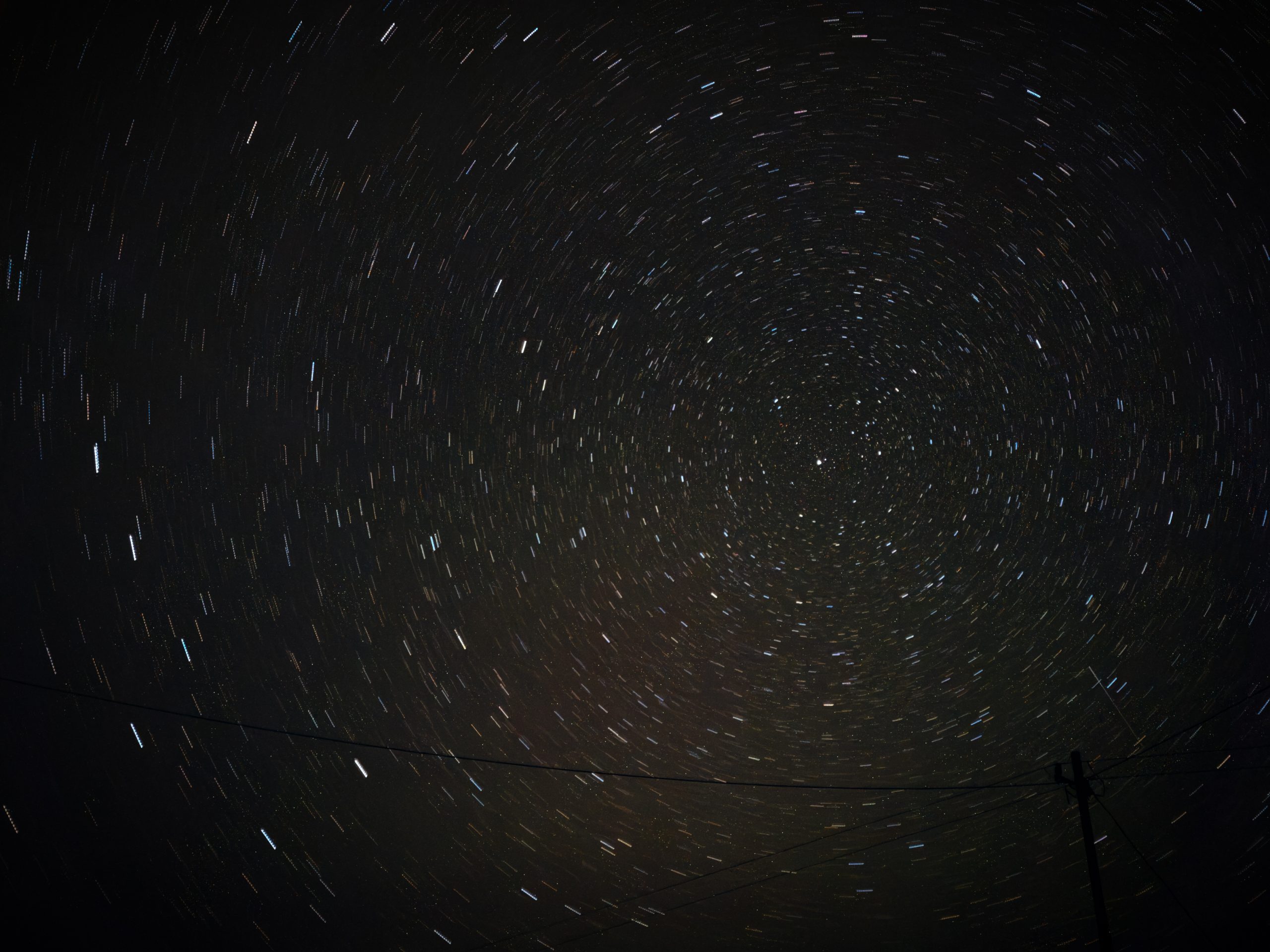
Shot from high, dry Ladakh skies, the low light pollution lets even faint stars leave colorful trails, from blue‑white hot stars to orange cooler ones.
Star trails are created by capturing the apparent motion of the stars as the Earth rotates. Instead of appearing as single points of light, the stars form graceful arcs or circular paths across the sky when photographed with long exposures or by stacking many shorter images.
| Camera | Samsung Galaxy S22 Ultra |
| Lens | 13mm f/2.2 at 12MP |
| Filter | None |
| Mount | Non-tracking Tripod |
| Lights | 9 × 30 seconds |
| Darks | None |
| Total Integration Time | 4.5 minutes |
| Stacked | Expert RAW in Samsung |
| Post Processing | Adobe Photoshop & Lightroom |
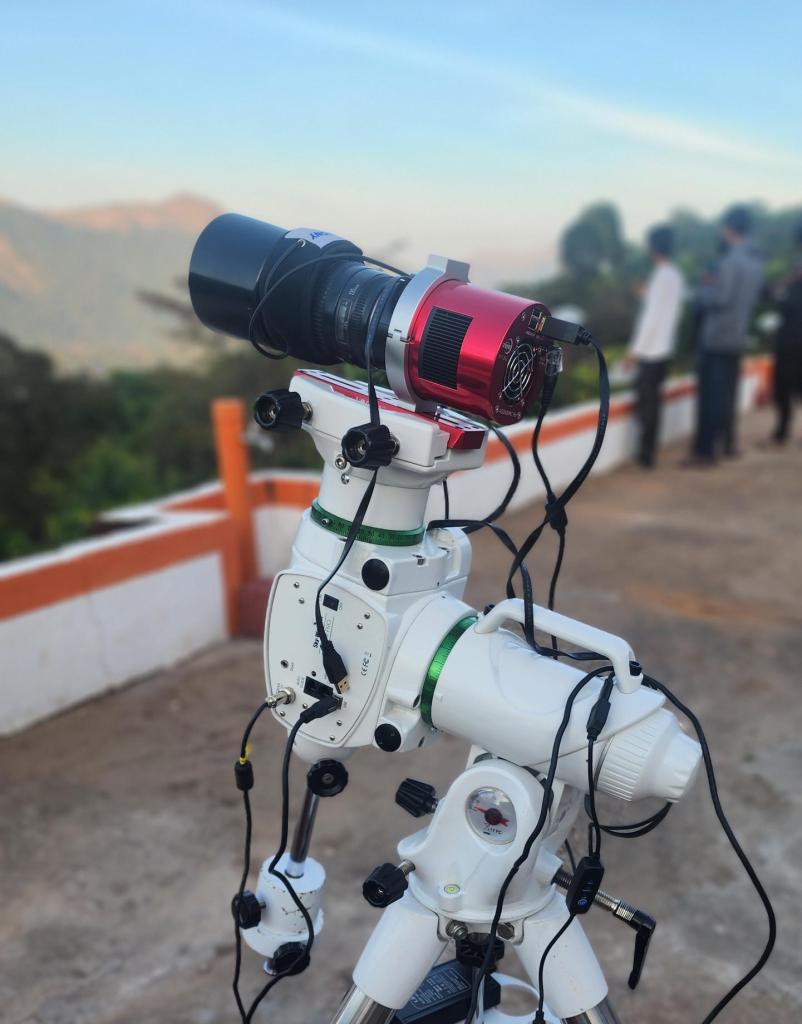
The center of these trails points toward the celestial pole in the Northern Hemisphere around Polaris, and in the Southern Hemisphere near the faint star Sigma Octantis. This creates the beautiful circular patterns often seen in star-trail photography.
As the Earth spins, stars near the pole trace small, tight circles, while stars farther away sweep out long, dramatic arcs. Foreground elements like trees, mountains, buildings, or even telescopes add depth and make the movement of the sky feel alive.
Star trails reveal something we don’t notice with the naked eye: We are standing on a rotating planet under a sky in constant motion.
Whether made with a single long exposure or hundreds of stacked images, star trails show the passage of time in a single frame, blending science and art into one of the most iconic styles of night-sky photography.
best months to photograph from india
Star trails can be photographed throughout the year, but the best months in India are typically from October to March. During this period, the skies are clearer, humidity is lower, and light pollution from haze is minimal—giving you longer, uninterrupted exposures. Winter months (December–February) are especially ideal, offering crisp, transparent skies and excellent visibility for circular star-trail patterns around Polaris.
For symmetrical circular trails, point your camera toward the north, where Polaris remains nearly fixed. For dramatic sweeping arcs, aim east or west, and for straight lines, aim toward the south where stars rise and set rapidly. Choosing a moonless night, away from city lights, greatly improves the contrast and color of your star trails.