
Seagull & Thor's Helmet Nebula
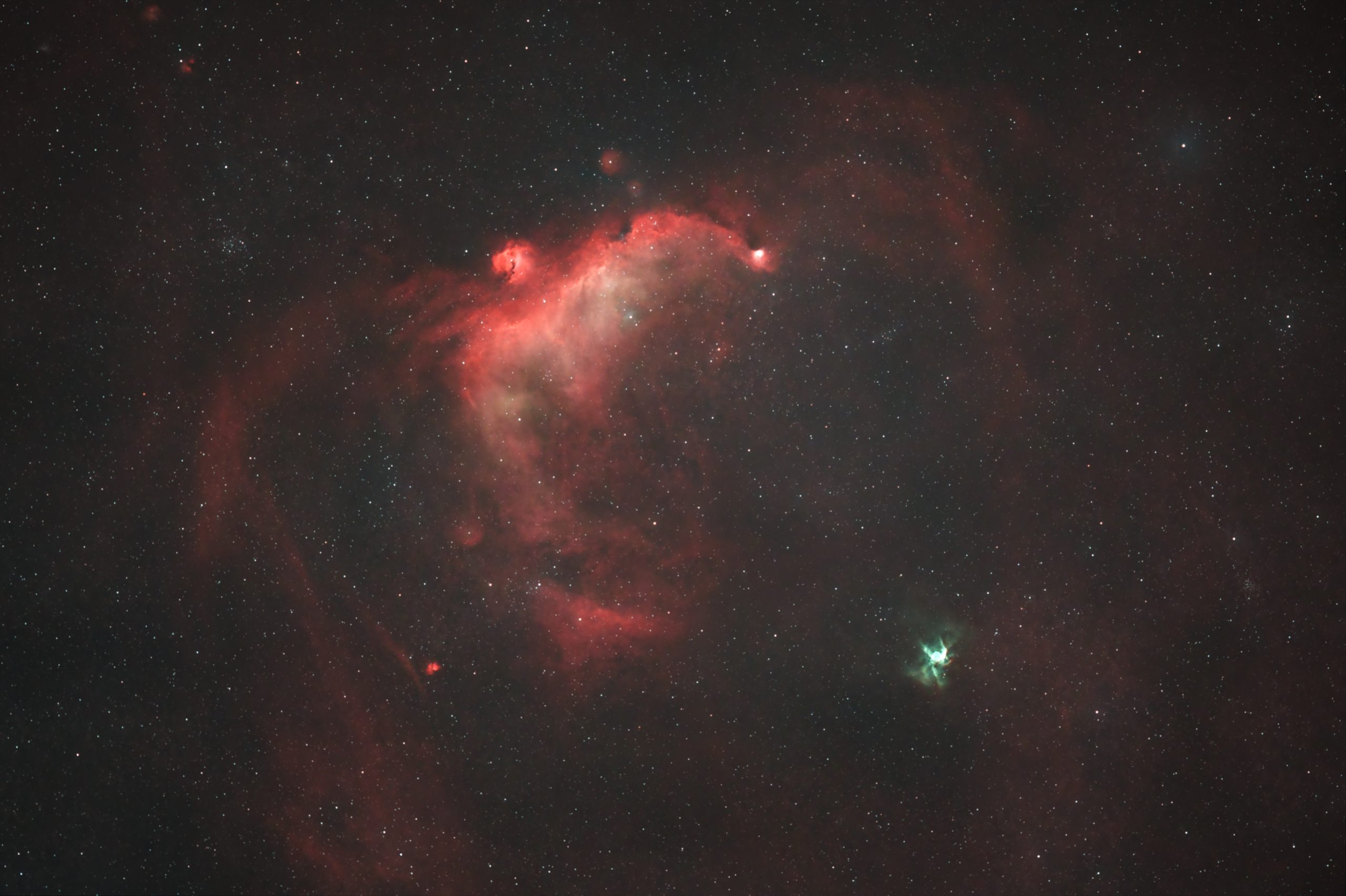
The Seagull Nebula (IC 2177) and Thor’s Helmet Nebula (NGC 2359) are two glowing clouds of gas located in the southern Milky Way, each offering a very different visual appearance. The Seagull Nebula lies about 3,600-3,800 light-years away along the border constellations Monoceros and Canis Major, stretching nearly 100 light-years across. In wide-field images, its curved red shape resembles a flying bird, giving it the nickname “Seagull.” Thor’s Helmet Nebula, much smaller but more energetic, lies much farther away at 12,000-15,000 light-years, also located in the constellation Canis Major, appearing like a celestial warrior’s helmet surrounded by glowing arcs.
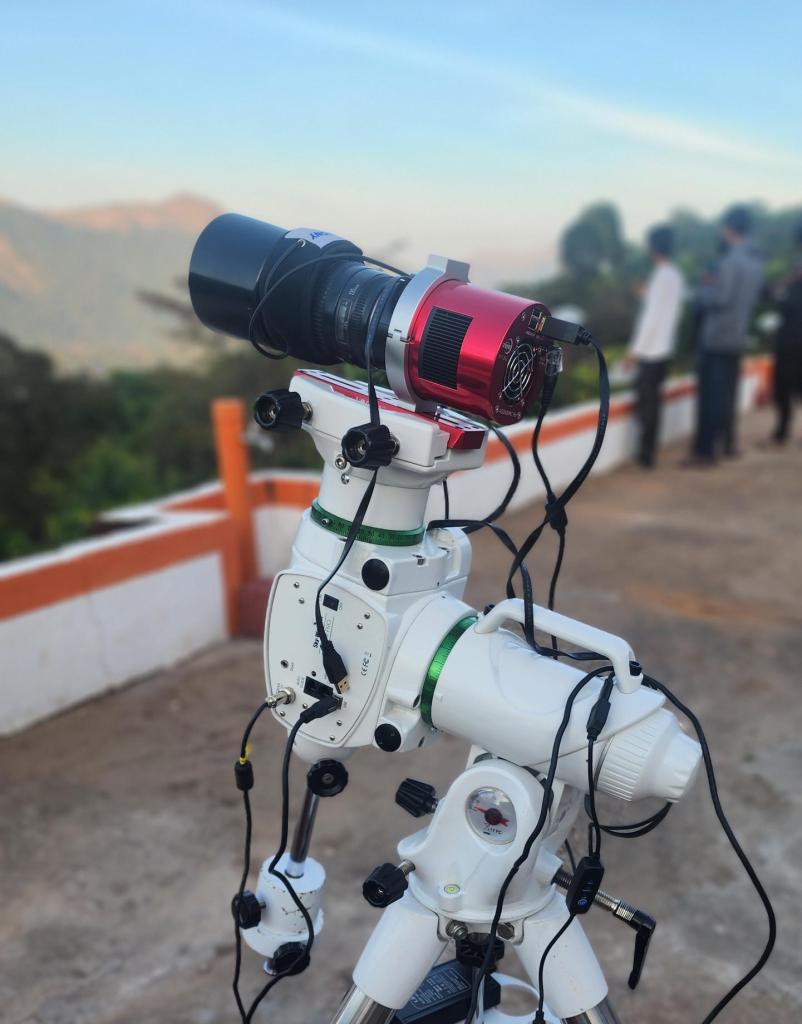
| Camera | ZWO ASI2400 MC Pro |
| Lens | Canon 135mm f/2 |
| Filter | Quadband Filter |
| Mount | EQ6R Pro |
| Lights | 50 × 150 seconds |
| Darks | 10 × 150 seconds |
| Total Integration Time | 2 hours 5 minutes |
| Stacked | Deep Sky Stacker |
| Post Processing | Adobe Photoshop & Lightroom |
The Seagull Nebula is an emission nebula, where clouds of hydrogen gas glow red when energized by nearby hot young stars. Its structure is full of ridges, wisps, and flowing curves shaped by stellar winds. In contrast, Thor’s Helmet Nebula surrounds a very hot and massive Wolf-Rayet star, whose powerful winds push the surrounding gas outward, forming bubble-like shapes and shock fronts. These interactions create the nebula’s distinctive helmet-and-wings appearance. Though different in size and distance, both nebulae highlight how massive stars shape and sculpt the gas around them
best months to photograph from india
These nebulae are best observed and photographed during the winter months in India. Both objects reach their highest point in the sky between December and March. The Seagull Nebula reaches its peaks in January and February, providing the clearest views near midnight. Thor’s Helmet, located close to Sirius, the brightest star in the sky, is also best seen from December to March, with optimal visibility in January and February. Together, these two nebulae make excellent winter targets for astrophotography, especially for wide-field imaging of the southern Milky Way.